
Some couples reach a point where conversations feel more like careful negotiations than chances to connect. Two people who once shared jokes, plans and comfort can find themselves feeling like they are on different wavelengths without fully knowing how they got there. Even the strongest relationships hit phases where misunderstandings stack up faster than they can be sorted through.
Support does not always require rearranging schedules, finding childcare, hunting for parking near an office or feeling worn out before the session even begins. Many couples across California are discovering that online sessions remove barriers that once made therapy stressful. With teletherapy for couples in California, partners can sit in their own homes, breathe a little easier and talk openly without the extra tension that comes with running from one appointment to another.
The heart of this approach is simple. When couples have easier access to support, they show up more consistently. When they show up consistently, they repair things more steadily. And when repair feels possible, hope returns.
This guide takes a deep look at how teletherapyhelps couples communicate, reconnect and support each other in a world where stress levels rise quickly and misunderstandings happen easily. You will find practical insights, examples and tools that couples use with real therapists across the state.
MindShift Psychological Services offers telehealth across California along with in-person sessions in Corona and Riverside. Nearly everything in this guide reflects what couples bring into our sessions and what helps them move forward again.
Key Takeaways
- Telehealth teletherapymakes couples counseling more accessible, reducing stress around scheduling, travel, and logistics
- Online sessions often help partners communicate more calmly, honestly, and consistently from familiar environments
- Telehealth teletherapysessions allow couples to repair emotional injuries, strengthen connection, and build healthier communication patterns over time
Why Teletherapy Has Become a Relationship Game Changer
Online sessions make therapy feel less intimidating for many couples. When you can meet in familiar surroundings, conversations tend to unfold more naturally.
For some partners, sitting side by side on a couch brings comfort. For others, joining from separate rooms or locations gives them the space they need to express thoughts that feel harder to say face to face. Telehealth offers both options.
Here are some of the reasons couples mention most often.
1. Lower Stress Before the Session
Walk through the door of a traditional office and your brain is already in alert mode. Many couples arrive tense from traffic or juggling responsibilities. Teletherapy lowers that activation. With tensions reduced, couples are more open, less reactive and more willing to talk instead of defend.
2. No Barrier to Long-Distance Relationships
Many partners live apart due to school, military duty, work schedules or caregiving responsibilities. Coordinating care once felt nearly impossible. Telehealth couples therapy removes that barrier completely. Both partners simply log in. The distance does not stand in the way of healing.
3. A Sense of Equality
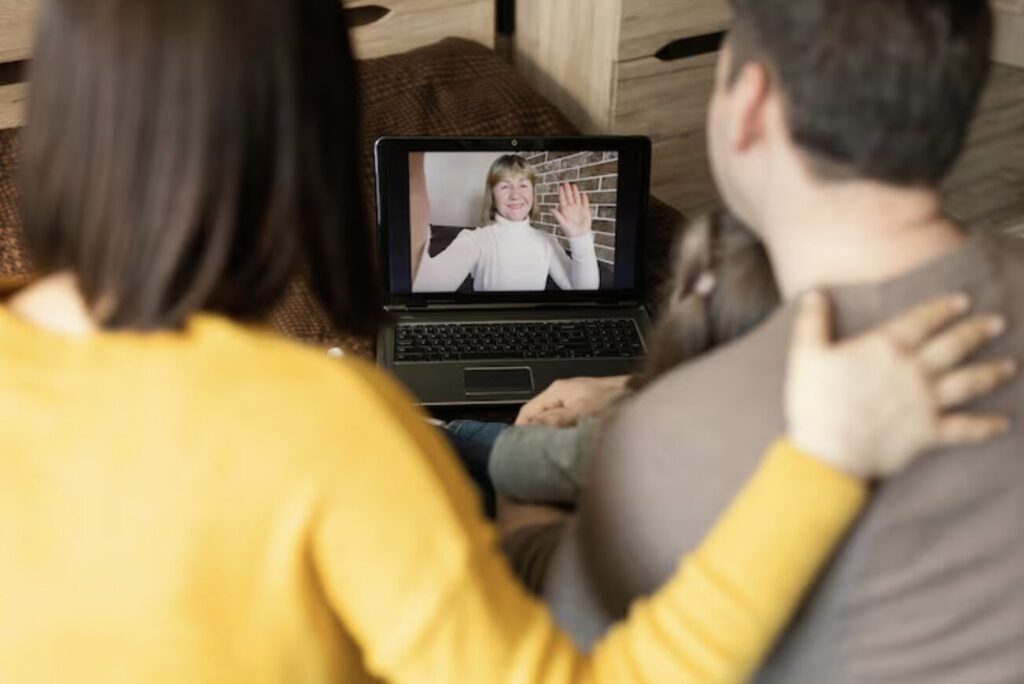
In some relationships, one partner tends to take the lead with logistics or planning. When therapy becomes a single click for both, sessions feel less like one person dragging the other along. Instead, both step into the space at the same time.
4. Affordability
While fees are the same between in-person and telehealth at MindShift Psychological Services, many couples choose online care because they save money on gas and transportation. With rising costs in California, this relief matters. Many families with IEHP and Tricare insurance also find telehealth especially convenient.
5. Greater Privacy
People often worry about bumping into someone they know in a waiting area, especially in smaller communities. Teletherapy eases that concern completely.
What Couples Bring Into Teletherapy
Every couple starts therapy with a unique history. Some sit down during times of distance and quiet frustration. Others arrive after repeated disagreements they cannot move past. Some feel like friends but not partners anymore. Others feel like adversaries without wanting to be.
Common themes include:
- Communication slipping into short replies or defensiveness
- Increased irritation or emotional shutdown
- Misunderstandings that lead to repeated arguments
- A feeling that connection used to feel easy but now feels unpredictable
- Conflicting expectations about affection, time together or household roles
- Emotional injuries that never fully healed
Therapists use these concerns as starting points, not verdicts. Teletherapy simply creates an easier environment to begin the work.
How Telehealth Couples Counseling Works
Online sessions follow the same evidence-based structure as in-person therapy. The difference lies in accessibility. Couples in Corona, Riverside, Los Angeles, the Central Valley or anywhere else in the state can participate fully.
A typical course of telehealth couples counseling includes:
1. An Opening Session to Understand the Relationship
Think of this as mapping out what each partner has been holding in. Both people share their perspective without needing to prove each other wrong. The therapist observes patterns, emotional responses and communication styles.
2. Identifying Stuck Points
Couples are rarely frustrated about the surface issue. The tone, timing or unspoken meaning beneath it often carries the real emotional weight. Therapists help couples identify these deeper themes.
3. Learning How to Talk Without Escalation

Many couples are surprised to learn that improving connection does not start with solving disagreements. It starts with reducing the emotional tension around them. Therapists teach strategies that lower reactivity so conversations do not spiral.
4. Strengthening Emotional Closeness
Emotional closeness does not depend on grand gestures. It grows through repeated moments of understanding, presence and acknowledgment. Teletherapy helps partners practice these skills in real time.
5. Repairing Old Hurts
Lingering emotional injuries often shape current reactions. When couples understand the origin of those feelings, they can respond to each other with more clarity and less fear.
6. Building Habits That Sustain Progress
Healing does not end when the session ends. Couples practice new patterns throughout the week, then reflect on progress during the next session.
Why Teletherapy Often Improves Communication Faster
Communication looks different when you are talking through a screen. Surprisingly, that difference often works in couples’ favor.
1. Neutral Territory
Instead of sitting in one partner’s preferred space, the screen becomes shared ground. Blame or tension tends to feel less intense.
2. Less Pressure to Perform
Without the physical intensity of an office, partners feel freer to express emotion. The result is more authenticity and less defensiveness.
3. Structured Turn-Taking
Online platforms naturally guide conversations so both partners receive uninterrupted time. This often leads to more balanced discussions.
4. Real-Time Emotional Regulation
Because both partners are in a familiar environment, their nervous systems stay more grounded. This reduces snapped responses, raised voices or shutdowns.
Supporting Long-Distance and Busy Couples
California is full of couples who live unique lifestyles. Nurses working opposite shifts. Military families with one partner stationed elsewhere. Couples with caregiving duties for elders or children. People balancing school and work.
Telehealth couples therapy solves the biggest challenge these couples face: being in the same place at the same time.
Because both partners join from wherever they are, they can work on their relationship even if one is in Corona and the other is in Sacramento. Even if one is in Riverside and the other is in San Diego. Even if they are in the same house, but need separate rooms to feel comfortable speaking.
This flexibility removes the tension of logistics so couples can focus on what really matters.
Recommended: The Power of Couples Retreats
The Role of Emotion Focused Strategies in Teletherapy
One of the most effective models for relationship work is Emotion Focused Therapy. It helps couples understand the protective patterns they use when feeling hurt or overwhelmed.
For example:
- One partner might withdrawwhen tension increases
- The other might pursue more intensely because the distance feels scary
Telehealth couples counseling allows couples to explore these patterns without feeling exposed or cornered. Therapists help them understand the meaning behind these reactions instead of viewing them as flaws.
Over time, couples learn how to respond to fear, disappointment or frustration in ways that draw them closer instead of pushing them farther apart.
How Teletherapy Supports Intimacy
Intimacy is one of the most common topics couples bring into sessions. It includes affection, emotional closeness, trust, comfort and vulnerability.
Teletherapy supports intimacy by providing:
- A quieter space to express needs
- A slower pace for sensitive conversations
- A setting where emotional walls come down gradually
- Tools for rebuilding comfort after periods of distance
Some couples find that telehealth couples counseling even encourages more honesty because it feels easier to talk about sensitive subjects when not seated across from the therapist in person.
Strengthening Conflict Resolution Skills

Conflict is not the problem. The pattern surrounding conflict is the problem. Telehealth couples counseling gives couples the time and space to reframe disagreements.
Therapists teach skills such as:
- Speaking from personal experience instead of accusation
- Listening for the emotional meaning underneath the words
- Pausing before responding
- Staying connected even when frustrated
- Expressing needs without turning them into demands
When couples practice these skills during sessions, they begin to feel more confident and less overwhelmed by conflict.
Who Benefits Most From Telehealth Couples Therapy
Teletherapy works well for:
- Couples juggling work and childcare
- Couples in long-distance arrangements
- Partners with mismatched schedules
- Parents who cannot easily leave the house
- Couples needing privacy away from crowded homes
- Anyone who feels more comfortable opening up online
It is also a strong fit for couples who want consistency. With fewer cancellations, progress moves forward more steadily.
How In-Person Therapy Fits Into the Process
For couples who prefer traditional sessions, Mindshift Psychological Services offers in-person care in Corona and Riverside. Some couples mix both. They have most sessions online and visit in person when they want a different environment or deeper work.
Both forms of therapy remain equally effective. What matters most is consistency and comfort.
What Growth Looks Like Over Time
Growth in couples therapy usually appears in stages. Each stage brings new shifts that strengthen trust, comfort and teamwork between partners.
Early Signs of Change
In the beginning, growth tends to show up through small but meaningful adjustments in daily interactions.
Many couples notice:
1. More Conversations Instead of Arguments
Partners start talking sooner instead of letting frustration build. Discussions feel less tense, and both people show more willingness to listen.
2. Less Fear Around Difficult Topics
Bringing up concerns becomes less stressful. Couples feel safer expressing what bothers them without expecting an immediate blowup.
3. More Comfort in Showing Appreciation
Simple acknowledgements return. A thank you, a kind comment or a gentle gesture starts to appear again.
4. Quicker Repair After Disagreements
Instead of staying stuck, partners reconnect sooner. One or both people take steps to check in, clear misunderstandings or apologize when needed.
5. A Stronger Sense of Partnership
Daily choices start reflecting more teamwork. Each person becomes more aware of how their words and actions affect the relationship.
6. Renewed Affection
Warmth and closeness begin resurfacing. Couples notice more relaxed moments together, even if they are brief.
7. A Feeling That Both People Are Trying Again
There is a noticeable shift where effort becomes mutual instead of one-sided.
These early signs help couples feel hopeful and supported as the process continues.
Shifts That Develop Later
As therapy continues, deeper changes begin to take hold. These shifts shape long-term stability and help partners connect on a more secure emotional level.
1. Smoother Conversations About the Future
Future plans feel lighter. Couples can discuss hopes, concerns and long-term goals with less tension.
2. Healthier Routines
New habits begin to form. Whether it is check-in conversations, shared tasks or more predictable communication, routines become steadier and easier to maintain.
3. Stronger Emotional Openness
Partners start expressing feelings with more clarity and less defensiveness. They become better at sharing worries and needs without shutting down or pulling away.
4. Greater Sense of Trust
Confidence in the relationship grows as partners see consistent follow-through and healthier communication patterns.
By this stage, many couples describe feeling more settled and more connected. They recognize that growth is not a matter of perfection. It is the process of learning how to show up for each other with steadier communication and genuine intention.
Recommended: Measuring Progress in Marriage After Therapy
Healing Together With MindShift Psychological Services

At MindShift Psychological Services, we specialize in supporting couples through online sessions that fit real lives. We also offer in-person sessions in our Corona and Riverside offices for those who prefer that environment. Telehealth across California makes it possible for partners to stay connected, even when life gets complicated.
We help couples rebuild trust, restore comfort, improve communication and create a relationship that feels steady again. Whether you are trying to reconnect, preparing for marriage or facing long-standing challenges, we walk beside you with support and care.
If you are ready to strengthen your relationship, we would love to support you through teletherapy for couples in California. We also specialize in other critical areas, including online therapy for anxiety and depression, virtual cognitive behavioral therapy, family therapy, and more.
Reach out to MindShift Psychological Services today and begin the process of healing together.
We accept Medicare, Medi-Cal, IEHP, and Tricare insurance plans.
Frequently Asked Questions
- Is teletherapy for couplesas effective as in-person counseling?
Yes. Telehealth couples therapy follows the same evidence-based approaches as in-person sessions and can be equally effective when couples participate consistently.
- What types of relationship issues work well with teletherapy?
Teletherapy is effective for communication problems, emotional distance, recurring conflict, intimacy concerns, trust issues, and life transition stressors.
- Can partners join sessions from different locations?
Absolutely. Teletherapy allows partners to join from separate homes, cities, or even different parts of California, which is especially helpful for long-distance or busy couples.
- How does teletherapy help reduce conflict escalation?
Being in a familiar environment helps partners stay emotionally regulated, making it easier to pause, listen, and respond thoughtfully instead of reacting defensively.
- Is telehealth couples therapyavailable throughout California?
Yes. Couples can work with a telehealth therapist in California regardless of location, while those nearby may also choose in-person sessions with a licensed therapist in Riverside and Corona.Bottom of Form